

What We Covered
Module 1: Oracle ORDBMS
Students kicked things off by setting up their environment with Oracle Database XE 21c and SQL Developer. From there, they explored:
-
User-Defined Types (UDTs): Why they matter, when to use them, and trade-offs.
-
Composite Objects & References: Modeling customer purchase orders, stock, and line items.
-
Nested Tables: Building purchase orders with embedded line items.
-
CRUD Operations: Insert, query, update, and delete on object tables.
-
Object Methods & PL/SQL: Adding real-world logic with custom functions.
Assignments kept things practical—students created book objects, composite types, and full purchase order systems step by step.
Module 2: MongoDB (NoSQL)
Next, the focus shifted to MongoDB, where participants got a taste of the flexibility and speed of NoSQL databases:
-
Installing MongoDB and Compass
-
Creating databases and inserting documents
-
Querying with selectors, projections, and operators
-
Embedding vs. Referencing data models
-
Aggregation pipelines for analytics
-
Indexes, validation, and schema enforcement
Students wrapped up by managing user and bookstore collections, running advanced queries, and working with aggregation operators.
Certificates of Excellence 🎓
We’re proud to recognize the students who went above and beyond, completing 10+ tasks during the training. Congratulations to our Certificate of Excellence awardees:
-
Mibsam Ahmed
-
Kousique Ahmmed
-
Saalim Araf
-
Atyea Sanjeeda Ema
-
Joy Kumar Ghosh
-
Md Tamim Haque
-
Ahnaf Kabir
-
Adline Moury Rozario
-
Dewan Najmus Saqib
-
Tamim Shadman
-
S. T. A. Mahmud Tonmoy
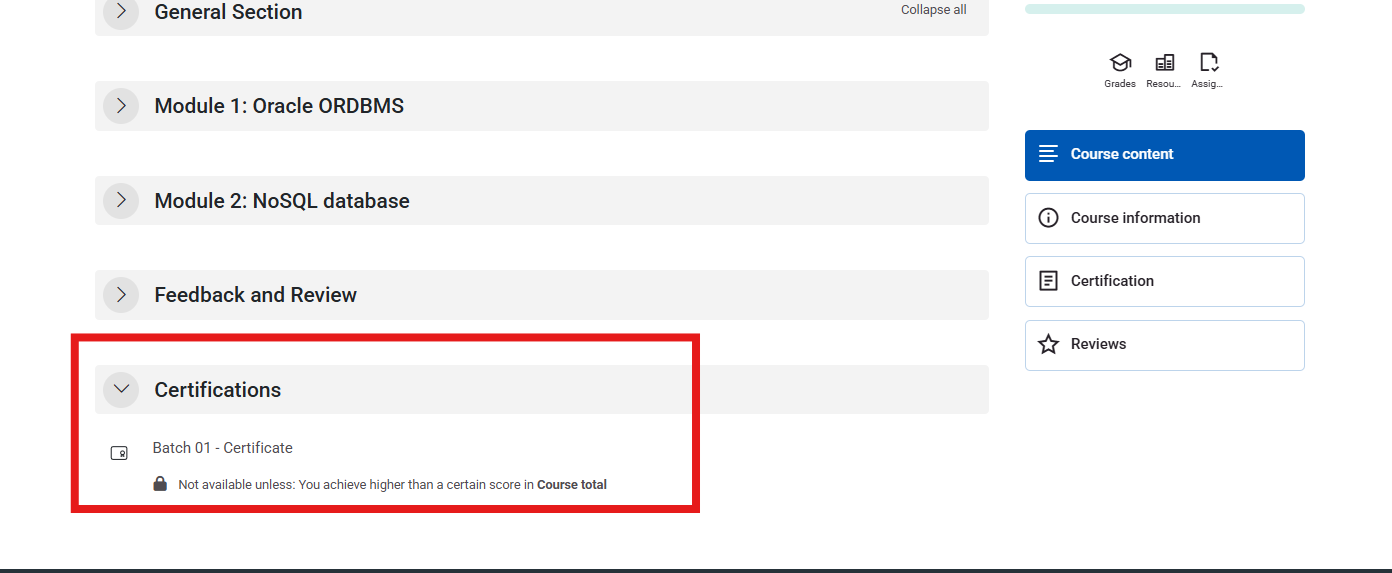
The certificate can be downloaded from the course page:
Looking Ahead
The feedback we received has been inspiring—students loved the mix of theory, real-world examples, and hands-on practice. By working with both Oracle ORDBMS and MongoDB, participants are now better equipped for careers in software development, data engineering, and analytics.
At 3dots Service Systems, we’re committed to creating more opportunities like this to help students bridge the gap between classroom learning and industry practice.